
- Search
- About
- Blog
- Careers
- Compounding Pharmacy
- Finance
- Hotels
- Our Team
- Our Mission
- Our Practice
- Virtual Consultations
- Areas We Serve
- Breast Reduction Bellevue Kirkland
- Breast Augmentation Bonney Lake
- Breast Augmentation Lake Tapps
- Breast Augmentation Hawaii
- Facial Fat Transfer in Bellevue & Kirkland With Dr. Khezri
- Tirzepatide For Weight Loss in Bellevue
- Tirzepatide Oral Tablets Kirkland & Bellevue
- Face
- Advanced Hairline Transplant
- Blepharoplasty
- Brow Lift
- Buccal Fat Removal
- Chin Augmentation
- Chin Liposuction
- CO2 Laser Resurfacing
- Direct Brow Lift
- Deep Plane Facelift
- Dimple Creation
- Ear Pinning
- Eyebrow Transplant
- Fat transfer to face
- Facelift
- Facelift With FX Laser Resurfacing
- Fat Transfer Under Eye
- Fat Transfer To Lips
- Grafts Neograft Follicular Unit Extraction
- Hair Transplant
- Hair Transplant Revision
- Hairline Lowering
- Laser Facelift
- Lip Lift
- Liquid Facelift
- Lower Blepharoplasty
- Lower Face Contouring
- Major Scalp Reduction
- Mini Facelift
- Midface Lift
- Minor Scalp Reduction
- Nano Fat Transfer For Your Under-Eyes
- Nano Fat Hair Transplant
- Neck Lift
- Neck Liposuction
- Nose Acne Laser Resurfacing
- Platysmaplasty
- Pumpkin Planing
- Revision Facelift
- Revision Rhinoplasty
- Rhinoplasty / Septoplasty
- Scalp Expander
- Submentoplasty
- Temporal Brow Lift
- Ultrasonic Piezo Rhinoplasty
- Upper Blepharoplasty
- Breast
- Breast Augmentation
- Breast Augmentation Exparel
- Breast Augmentation With Lift
- Breast Augmentation: Gummy Bear
- Breast Augmentation: Saline
- Breast Augmentation: Silicone
- Breast Implant Exchange
- Breast Lift
- Breast Lift With Implant Removal
- Breast Reconstruction Revision
- Breast Reduction
- Breast Reduction Revision
- Breast Revision
- Breast Animation Correction
- Dual Plan Breast Augmentation
- En Bloc Breast Implant Removal
- Fat Transfer to Breasts
- Gynecomastia
- Ideal Breast Implant
- Mandibular Implants
- Revision Breast Lift
- Subfacial Breast Augmentation
- Transaxillary Breast Augmentation
- Transumbilical Breast Augmentation
- Vectra3D Imaging
- Body
- Arm Lift
- Arm Liposuction
- Back Liposuction
- Body Lift
- Brazilian Butt Lift
- Belt Lipectomy
- Bra Line Back Lift
- Breast Lift with Tummy Tuck
- Clitoral Hood Reduction
- Exparel Tummy Tuck
- Extended Tummy Tuck
- Fleur De Lis Tummy Tuck
- Hip Dip Fat Transfer
- Knee Liposuction
- Labiaplasty
- Liposuction
- Liposuction 360
- Liposuction on Thighs
- Male Tummy Tuck
- Mini Tummy Tuck
- Mommy Makeover
- Monsplasty
- Muscle Plication
- Plastic Surgery After Massive Weight Loss
- Revision Mommy Makeover
- Reverse Tummy Tuck
- Skin Removal After Weight Loss
- Thigh lift
- Tummy Tuck
- Tummy Tuck Revision
- Tummy Tuck With Thigh Lift
- Tummy Tuck After Weight Loss
- Tummy Tuck After Semaglutide
- Vaser High Definition
- Hymenoplasty
- Weight Loss
- Non-Invasive
- Bellafill
- Botox
- Botox For Bunny Lines
- Botox for Droopy Eyelids
- Botox For Hooded Eyes
- Botox For Gummy Smile
- Botox For Smile Lines
- Botox For Platysmal Bands
- Botox for Migraines
- Botox for Bruxism
- Botox For TMJ
- Botox for Calves
- Botox for Premature Ejaculation
- Botox for Hair Loss
- Botox For Plantar Hyperhidrosis
- Cheek Filler
- Chin Filler
- Dermal Facial Fillers
- Dysport
- Daxxify
- Hand Filler
- Jaw Filler
- Juvederm
- Kybella
- Lip Filler
- Laser Hair Removal For Men
- Laser Hair Removal For Women
- Marionette Line Filler
- Non-Surgical Hair Restoration
- Non-Surgical Rhinoplasty
- Non-Surgical Gynecomastia
- Penile Filler
- Radiesse
- Restylane
- Restylane Eyelight
- Rain Facial
- Smile Line Filler
- Sculptra
- Scrotum For Botox
- Trans Laser Hair Removal
- Tear Trough Filler
- Trapezius Botox
- Temple Filler
- ThermiVa
- Salmon PDRN Treatment
- Skin
- Keloid Scar Treatment
- Acne Treatment
- Brow Lamination
- Chemical Peel
- Combo Brows
- Dermaplaning
- Eyebrow Tint
- Free Skin Consultation
- IPL
- Laser Hair Removal
- Laser Patch Test Protocol
- Laser Scar Resurfacing
- Laser Tattoo Removal
- Lash & Brow Services
- Lash Extensions
- Lash Lift & Tint
- Led Light Therapy
- Melasma Treatment
- Microneedling
- Mole Removal
- Photofacial
- Powder Brows
- RF Microneedling for Scars
- RF Microneedling
- The Perfect Derma Peel
- VI Peel
- Waxing
- Zombie Carbon Laser Peel
- Medical Treatments
- Specials
- Pricing
- Gallery
- Call (425) 576-1700
Refresh Your Look With Blepharoplasty Bellevue & Kirkland
Procedure Time
1 Hours
Recovery Time
1 Week
With age, many people notice their eyes looking more tired, even if they sleep well and take care of their skin. Sagging eyelids and undereye bags can make the face look older or sleepy.
Blepharoplasty, also known as eyelid surgery, is a cosmetic procedure designed to rejuvenate the appearance of the eyelids. It can target the upper eyelids, lower eyelids, or both, addressing concerns such as sagging skin, puffiness, and under-eye bags.
In some cases, blepharoplasty is performed as a functional procedure rather than purely cosmetic. For example, when excess upper eyelid skin droops enough to obstruct peripheral vision, surgery can improve both appearance and sight. At Northwest Face & Body, we personalize eyelid surgery based on your anatomy and your goals, whether you want a brighter, more rested look, improved symmetry, or relief from heavy upper lids.
Upper Vs Lower Blepharoplasty
Blepharoplasty can treat the upper lids, lower lids, or both. Upper eyelid surgery lifts heavy, hooded skin and can also be functional when excess skin blocks peripheral vision. Lower eyelid surgery smooths under-eye bags and tightens lax skin. These procedures can refine eyelid shape and reduce puffiness, but they are not designed to smooth crow’s feet or fine surface lines. These concerns may require non-surgical treatments such as injectables.
What Is An Upper Eyelid Surgery?
Upper blepharoplasty is a surgical procedure that removes or repositions excess skin, and in some cases, a small amount of muscle or fat, through an incision hidden in the natural crease of the upper eyelid. Upper eyelid surgery is typically performed using local anesthesia with light sedation or general anesthesia based on individual cases.
It is designed to create a more open, rested appearance and can improve side vision when drooping skin hangs over the eyelashes. Most patients can return to normal activities within a few days, with swelling and bruising usually fading over 1–2 weeks.
What Is A Lower Eyelid Surgery?
Lower blepharoplasty is a surgical procedure that addresses the lower eyelid area using either a transconjunctival approach (inside the eyelid) or a subciliary approach (just below the lash line). It focuses on reducing puffiness, smoothing under-eye bags, and tightening lax skin. The transconjunctival approach removes or repositions fat without an external scar. In contrast, the subciliary approach is used for skin tightening and may be combined with lid-support techniques (canthopexy or canthoplasty) or skin treatments.
The choice of technique depends on factors such as skin quality, fat prolapse, lid tone, and overall facial balance.
In some cases, dark circles are caused by fat loss rather than excess fat. For such patients, treatment may include fat repositioning or injectable fillers to restore balance.
Why Consider Blepharoplasty in Bellevue?
Bellevue has become a sought-after destination for blepharoplasty, attracting patients who want a refreshed, youthful appearance with results that look entirely natural. At Northwest Face & Body, patients benefit from the skill of board-certified surgeons who combine advanced surgical techniques with an artistic eye for detail.
Serving the greater Seattle metro area, including professionals, community leaders, and individuals seeking age-defying results, the clinic offers personalized treatment plans and a discreet, patient-centered experience.
Am I a Good Candidate for Blepharoplasty
Blepharoplasty (eyelid surgery) can address both cosmetic and functional concerns, and is generally categorized into upper and lower procedures.
Upper blepharoplasty may be right for you if you want to correct excess skin or heaviness in the upper eyelids that affects your appearance or vision. You might be a good candidate for upper blepharoplasty in Bellevue and Kirkland if you have:
- Drooping upper lids that make your eyes appear smaller or heavy.
- Vision is partially blocked by overhanging upper eyelid skin.
- A constant “tired” look even when you feel well-rested.
Lower blepharoplasty is suited for patients who want to smooth and rejuvenate the under-eye area. You might be a good candidate for lower blepharoplasty if you have:
- Puffiness or under-eye bags that don’t improve with rest.
- Loose or sagging skin beneath the eyes that affects facial harmony.
- An overall tired appearance despite adequate sleep and good health.
Ideal candidates for these procedures are generally in good overall health, non-smokers, and have realistic expectations about surgical outcomes.
What Happens During the Blepharoplasty Procedure?
Most blepharoplasty surgeries take 1–2 hours and are performed as same-day procedures, meaning you’ll be able to go home shortly after surgery. After administering local anesthesia with sedation or general anesthesia, your surgeon will follow the surgical plan discussed during your consultation.
During the upper eyelid surgery, the surgeon will make a precise incision in the natural crease to remove or adjust excess tissue. For lower eyelids, the incision may be inside the eyelid (no visible scar) or just below the lashes if skin tightening is needed.
Once the necessary adjustments are complete, the incisions are closed with fine sutures. You’ll rest in a recovery area until you’re ready to head home, along with detailed aftercare instructions.
When both upper and lower eyelids are treated together, the procedure is typically completed within a single visit and the recovery period is shorter than two separate surgeries.
How Much Does Blepharoplasty Cost in Bellevue?
The cost of blepharoplasty can vary based on factors such as the surgeon’s expertise, the type of procedure, and the complexity of the case.
Here at Northwest Face & Body, we offer transparent pricing for our most common procedures:
- Upper or Lower Eyelids: $3,500
- Upper and Lower Eyelids: $6,595
- Lower Lids with Tightening (Blepharocanthoplasty): $5,935
These prices typically include the surgeon’s fee, anesthesia, facility charges, and follow-up visits.
How Long Does It Take To Recover From An Eyelid Surgery?
Eyelid surgeries are quickly performed under both general and local anesthesia. Oftentimes, the procedures are relatively painless. The procedures are relatively painless, and recovery times are rapid. Patients often see a significant reduction in swelling and bruising within 3–5 days.
What to Expect During Recovery:
- Initial Downtime: Most patients return to work and light activities within 5–7 days.
- Early Care: Ice packs, head elevation, and prescribed eye ointments are commonly recommended during the first week to effectively reduce swelling and bruising.
- Final Results: While initial healing is fast, final results and the complete fading of minor residual swelling can take several weeks.
At Northwest Face & Body, our surgeon will provide detailed aftercare instructions to ensure a smooth and comfortable recovery process.
Eyelid Surgery Aftercare
Taking care of your eyes after surgery can contribute to faster healing and reduce the chance of complications. Our surgeon will provide personalized instructions, but here are some common guidelines that may be included:
- Rest and keep your head elevated: For the first week, sleep with your head raised on extra pillows so swelling goes down.
- Use cold packs: Gently place a cold pack near your eyes for 10–15 minutes at a time during the first 2–3 days to help with swelling and bruising.
- Use your medicine the right way: If your surgeon gives you eye drops or ointment, use them exactly as told to help healing and prevent infection.
- Do not irritate your eyes: Avoid contact lenses, eye makeup, and creams near the cuts until your surgeon says it is okay, usually 1–2 weeks.
- Protect your eyes: Wear sunglasses to protect your eyes from sun, wind, and dust while they heal.
- Skip lash treatments: Do not get lash extensions, lash lifts, or tints early on because they can irritate your eyes and raise infection risk.
- Avoid strenuous activity: Do not do hard workouts, heavy lifting, or bending over for about 2–3 weeks because it can increase swelling or slow healing.
- Go to your follow-up visits: Attend your checkups so your surgeon can make sure everything is healing properly.
Are There Any Risks or Side Effects?
As with any surgical procedure, blepharoplasty is followed by some common side effects, including swelling, bruising, and tightness. These are generally temporary and subside with proper aftercare. Other less common side effects include infection, dry eyes, temporary blurred vision, scarring, and, rarely, difficulty fully closing the eyes. However, when performed by an experienced, board-certified surgeon, serious complications are uncommon, and most patients recover without lasting issues.
How to Choose the Right Blepharoplasty Surgeon in Bellevue
To ensure safe, natural-looking results from your blepharoplasty, choose a board-certified plastic surgeon or oculoplastic specialist in Bellevue with extensive eyelid surgery experience. Look for before-and-after photos of real patients, read verified reviews, and schedule consultations to assess their expertise, communication style, and facility standards.
- Board certification: Our surgeons at Northwest Face & Body are board-certified, which reflects their advanced training and adherence to high safety standards.
- Specializes in blepharoplasty: Eyelid surgery at our practice is performed by surgeons with extensive experience in facial and eyelid procedures, allowing for careful attention to both function and aesthetics.
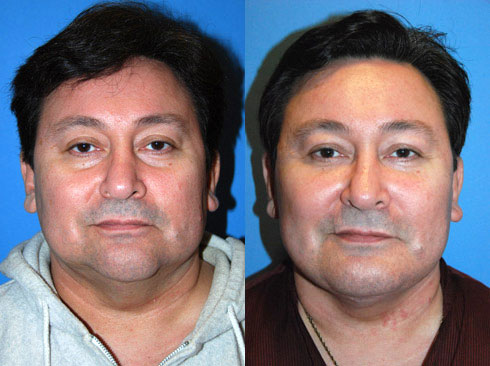
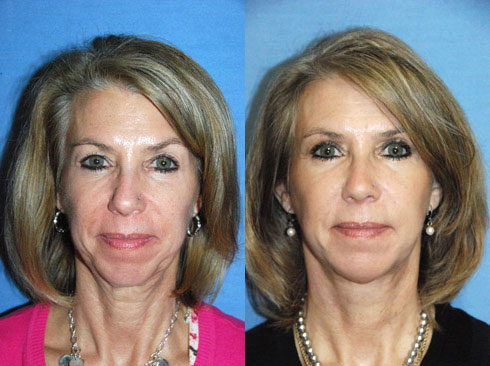
- Proven before & after results: Our gallery of real patient results shows consistent outcomes and natural-looking improvements.
- Positive patient reviews: Northwest Face & Body maintains a strong 4.8/5 rating on Google.
- Clear communication: We prioritize patient education, realistic expectations, and personalized treatment planning in our consultations. Our team will answer any questions you may have and explain the procedures clearly.
- Accredited surgical facility: Our facilities are Medicare-certified with modern equipment and strict safety protocols.
- Anesthesia safety: Our anesthesiologist has in-depth knowledge and extensive experience to ensure your safety and comfort.
Blepharoplasty Before & After Photos
Case 01
Case 02
Schedule Your Blepharoplasty Consultation in Bellevue
Bags, sagging, or hooded lids stealing your spark? At Northwest Face & Body, our Bellevue blepharoplasty specialists can help restore your bright, youthful gaze. During a personalized consultation, we’ll listen to your concerns, evaluate your eyelids, and explain exactly how the procedure can refresh your appearance, from surgical techniques to recovery. Call (425) 827-7725 or click here to book your appointment.
Frequently Asked Questions
Will there be visible scars?
Blepharoplasty incisions are usually placed in natural eyelid folds or just below the lash line, so scars tend to fade over time and are typically hard to notice once healed.
How long does eye blepharoplasty last?
Results often last several years. For many patients, the improvement can be long-lasting, but natural ageing continues.
What is a good age for blepharoplasty?
There’s no single recommended age for eyelid surgery. Many patients consider it in their 40s, 50s, or later when eyelid changes become noticeable, while some younger patients seek it for genetic reasons.
Is blepharoplasty a high-risk surgery?
Blepharoplasty is generally considered a low-risk procedure when performed by a qualified surgeon, though all surgeries carry some level of risk, and it also depends on the patient’s anatomy and any existing concerns.
How many hours is blepharoplasty?
Blepharoplasty typically takes about 1 to 2 hours, depending on whether the upper lids, lower lids, or both are treated.